




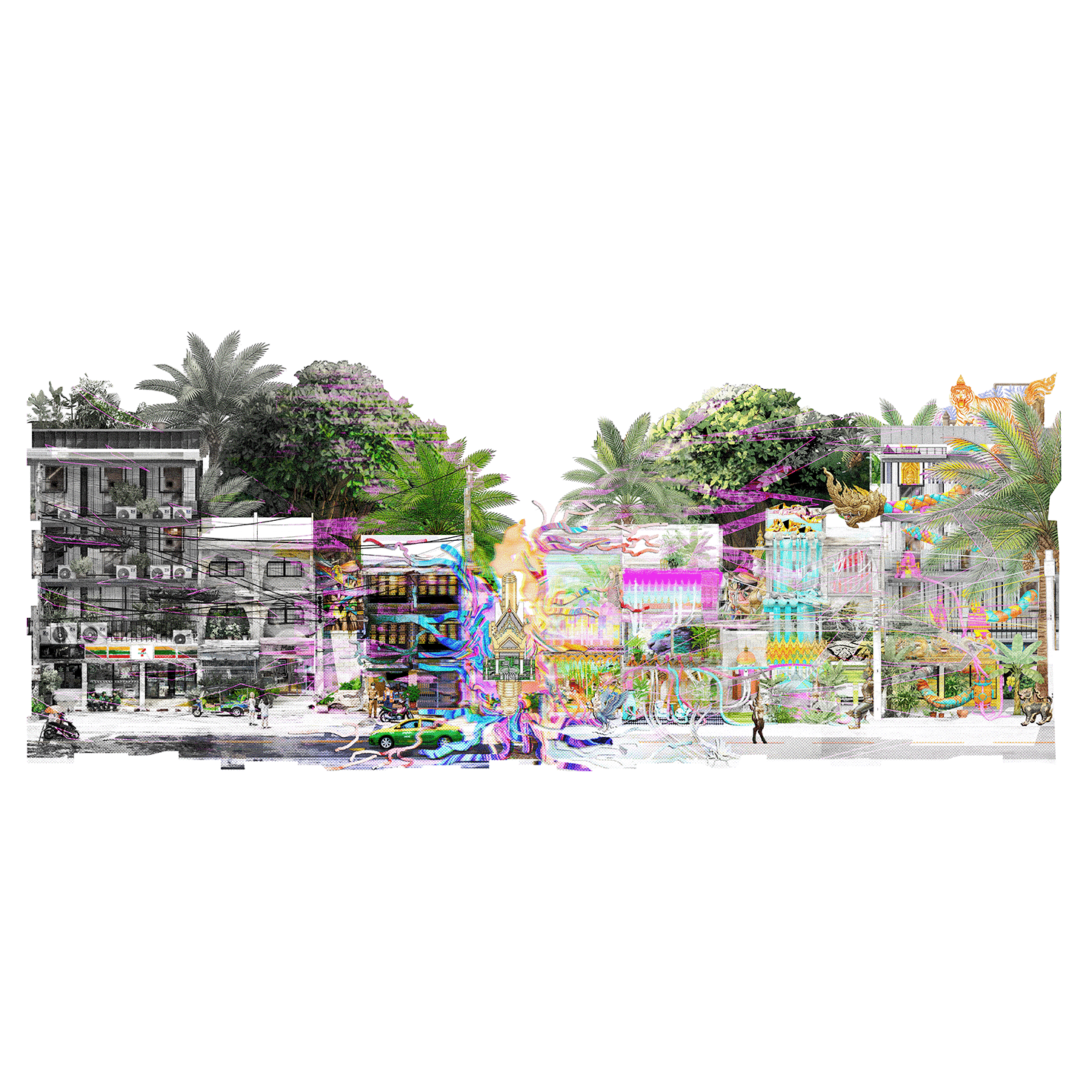

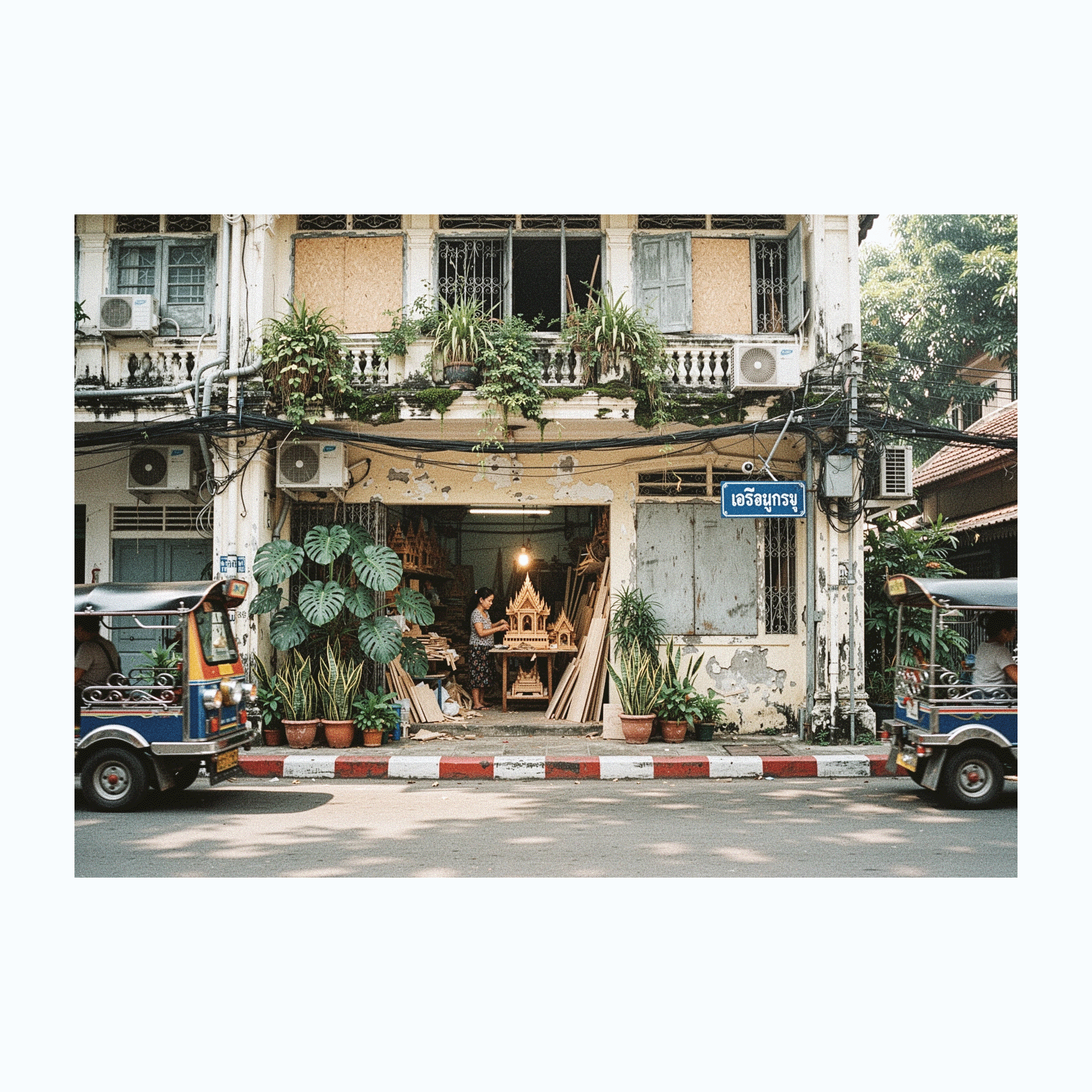

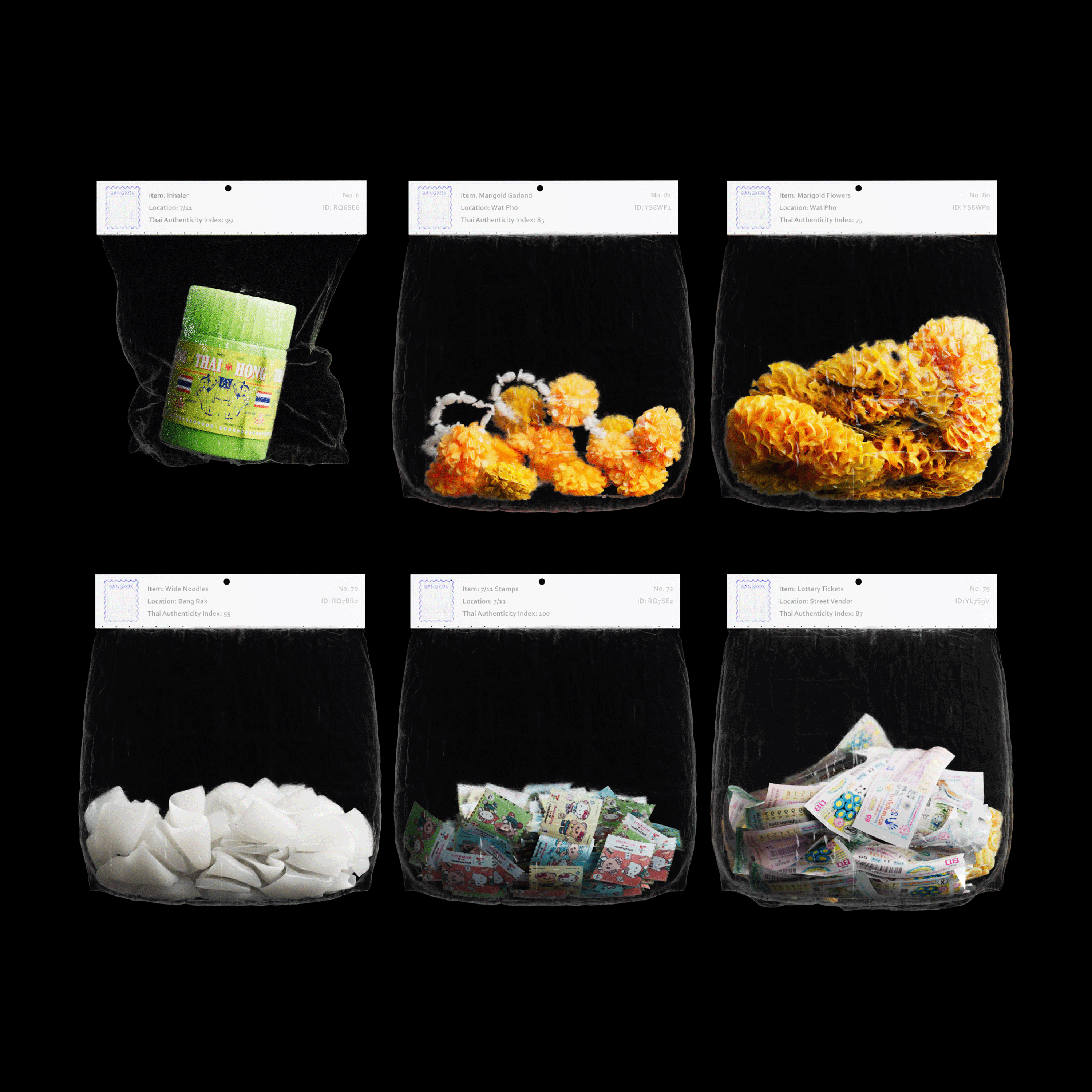

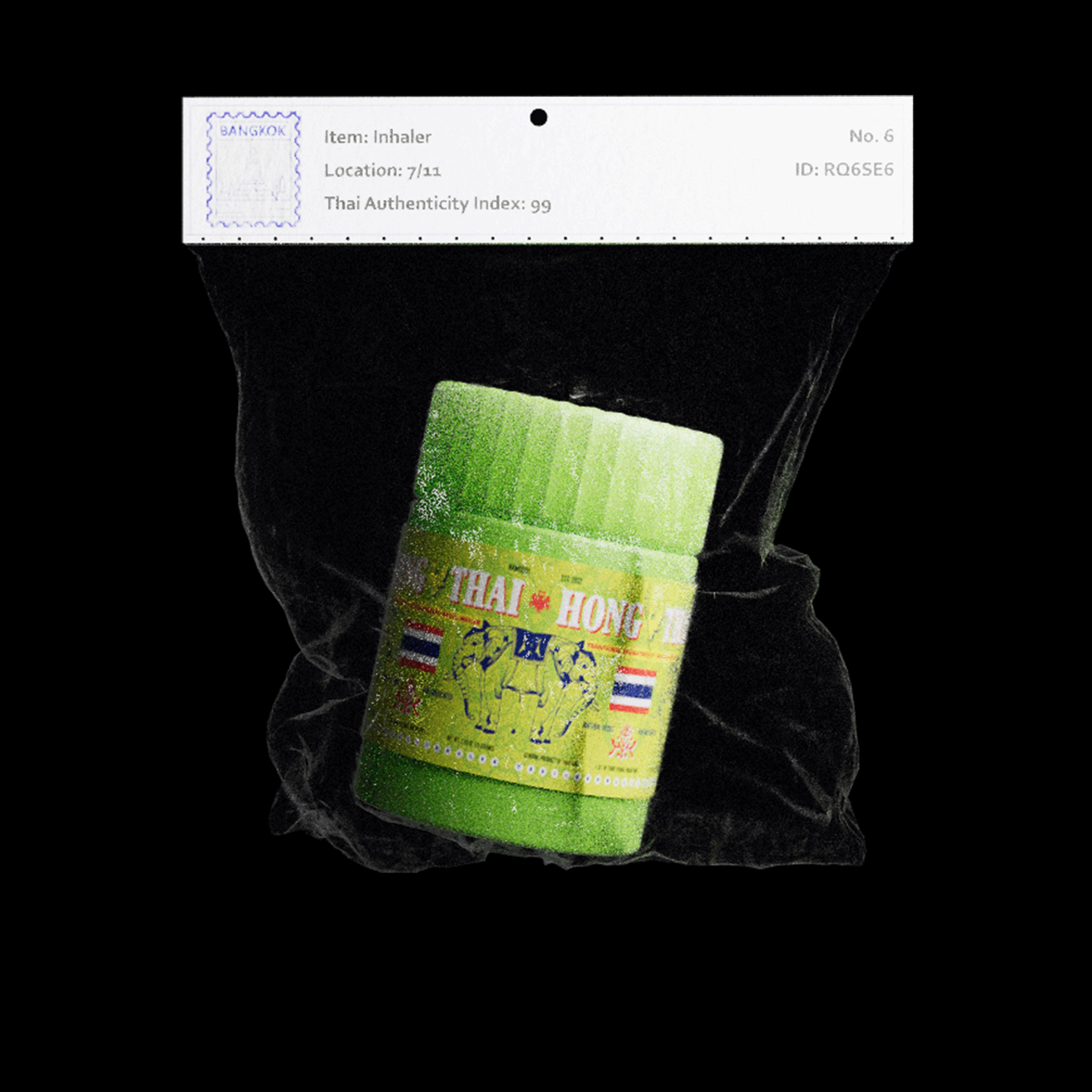


As architects, why do we often feel comfortable framing the "local" and "foreign" as oppositional? This dyadic tension repeats across the built world: vernacular and global, colonizer and Indigenous, original and copy, human-made and AI-generated. Pockets of Bangkok moves away from this concept of absolute contrast and explores how architects can access the productive energy generated by these tensions.
Pockets of Bangkok intentionally seeks to investigate and understand Bangkok as an effect of the energy generated by the interaction of the western foreign perspective and eastern local perspective. It is an exploration carried out via collaboration between foreigners living in Bangkok, Thai nationals who are born and raised in the city, and designers engaging the city as outsiders. These three perspectives are the relational tension that gives the project its conceptual charge.
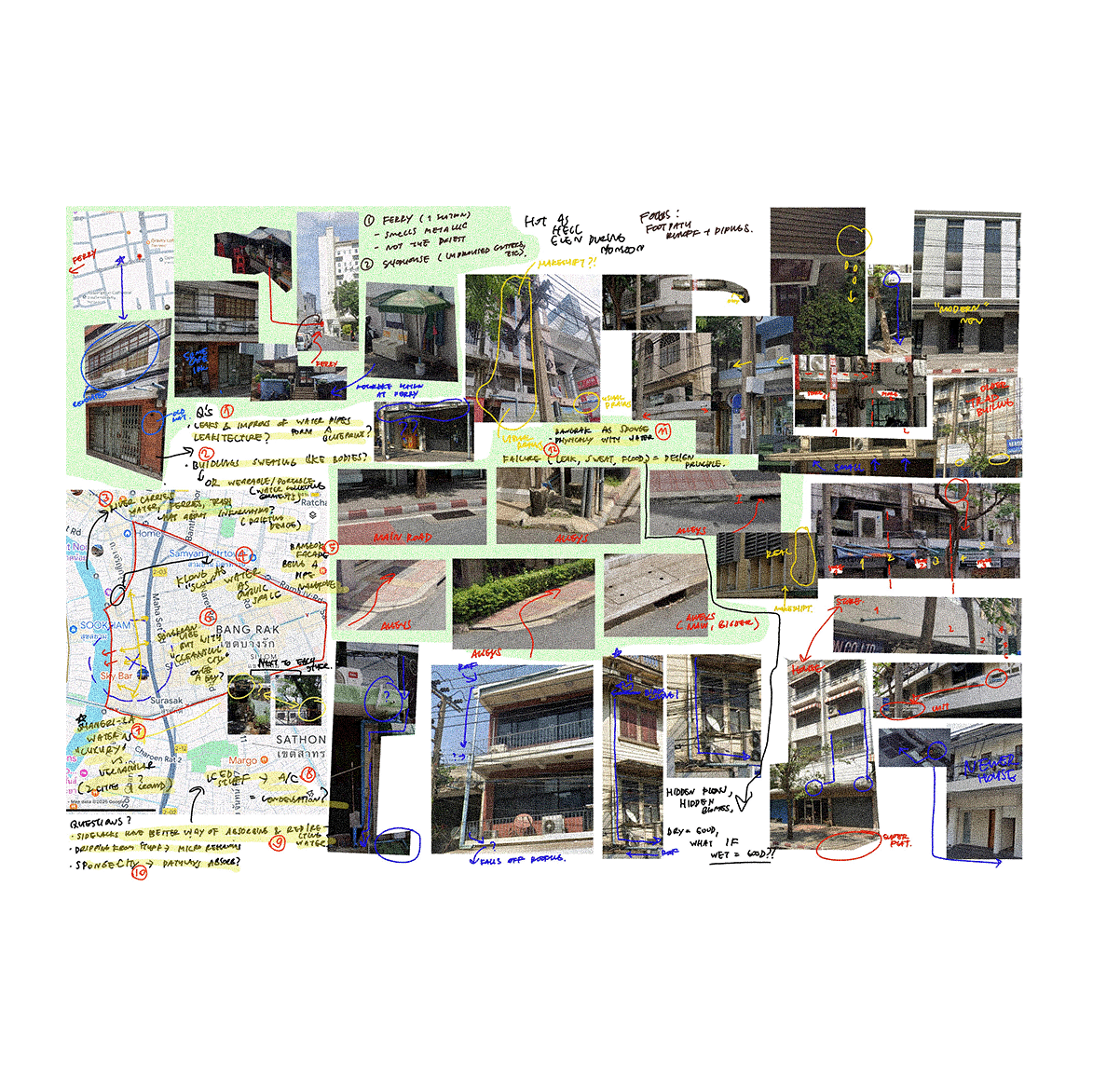
By creating the research from within this conflicted position, our recordings, writing, mappings, drawings, photos, documentations, and analysis of the city are embedded with the latent potential creative energy located in the gaps, inversions, and divergences between these different lenses. It is this tension and difference that allows a creative trajectory to emerge. Our methodology mirrors the logic that has long governed Thailand itself — a kingdom that has always derived its strength not from the exclusion of foreign influence, but from the productive management of it.
In the West, we are taught to choose resistance. Favor the local at the expense of the foreign, or vice versa. This stance is perilous, because it traps us in a cycle of cynicism, suffocating our creativity and leaving us with an architecture of resentment. Rather than resisting the foreign, the ambition here is to dance with it.
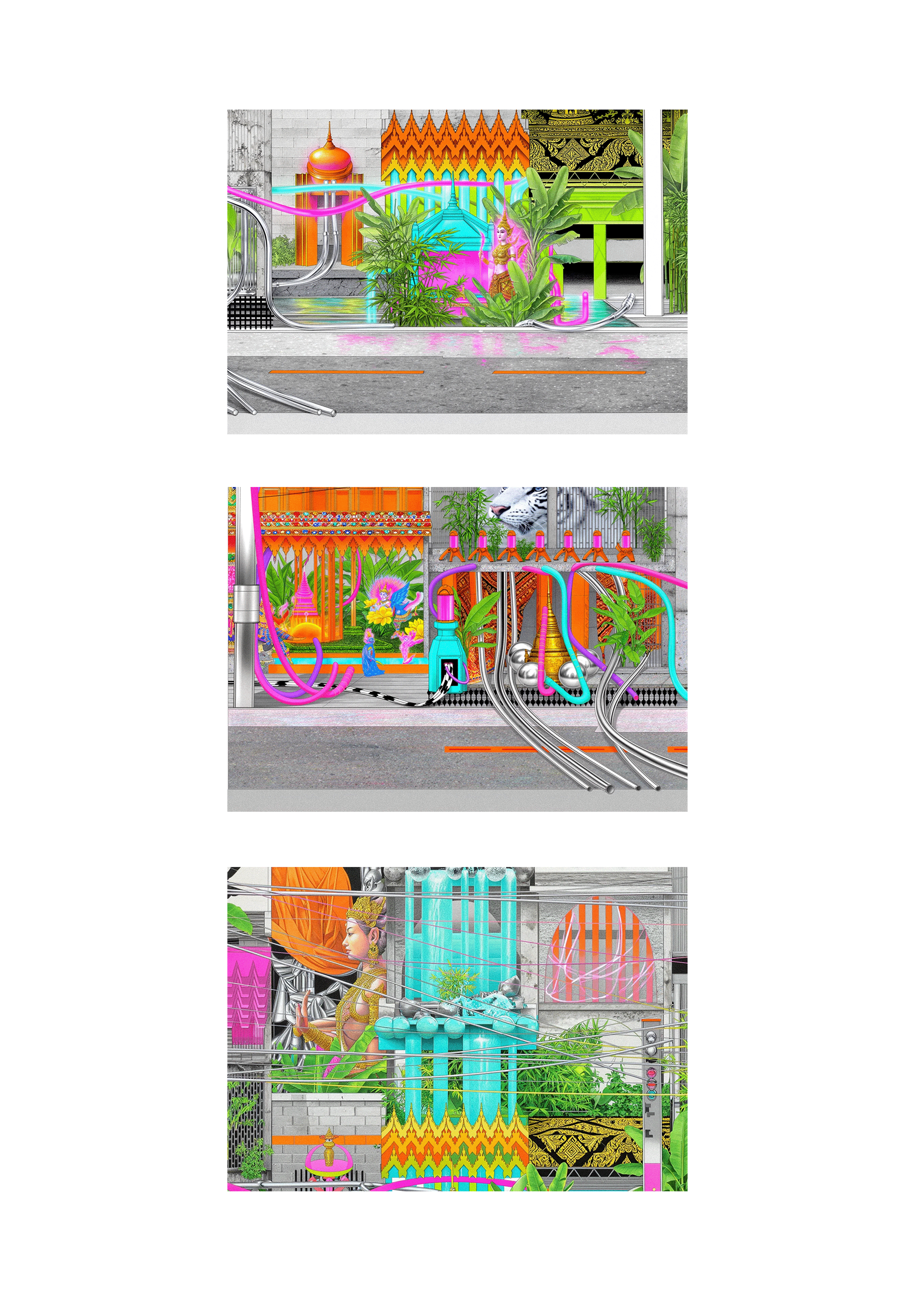
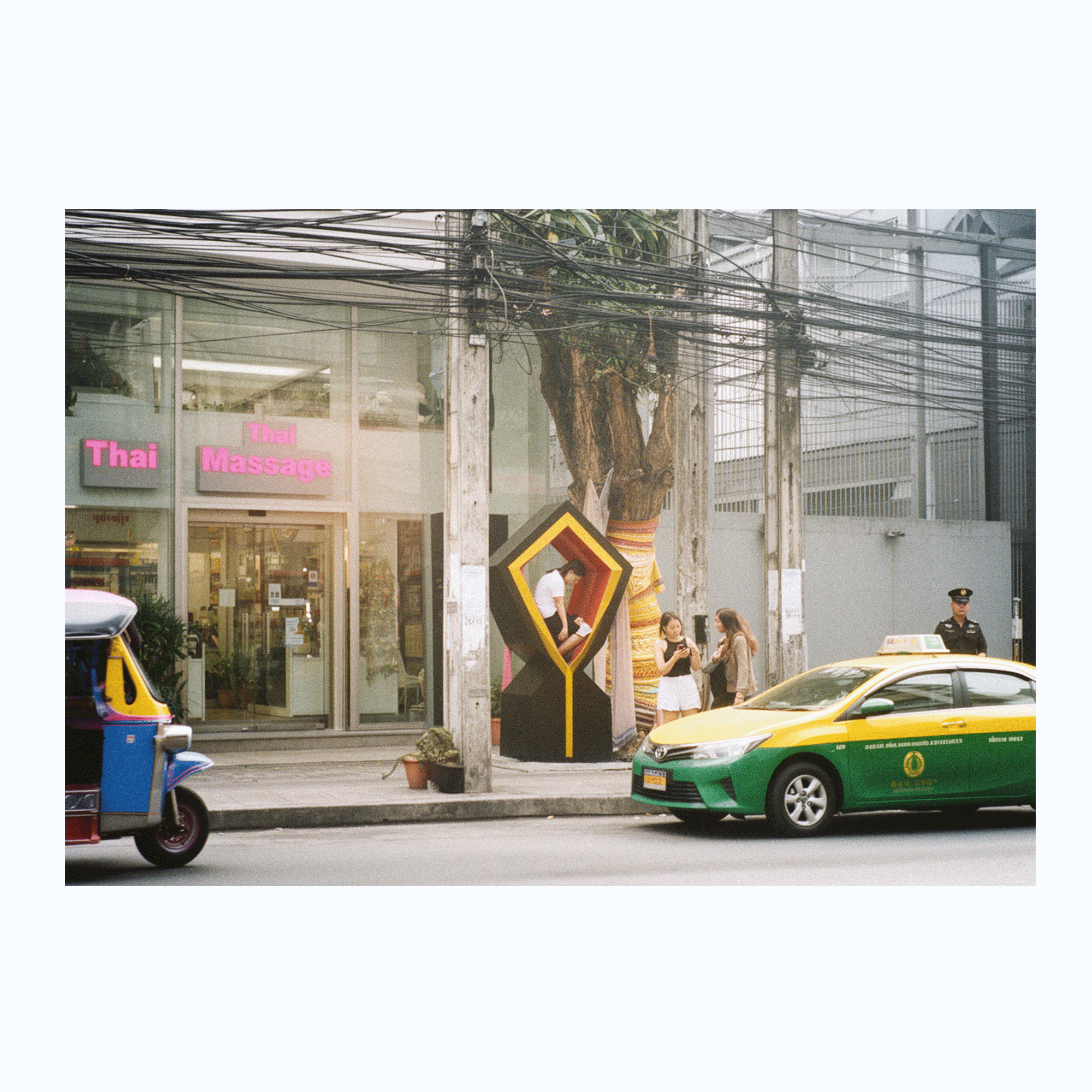
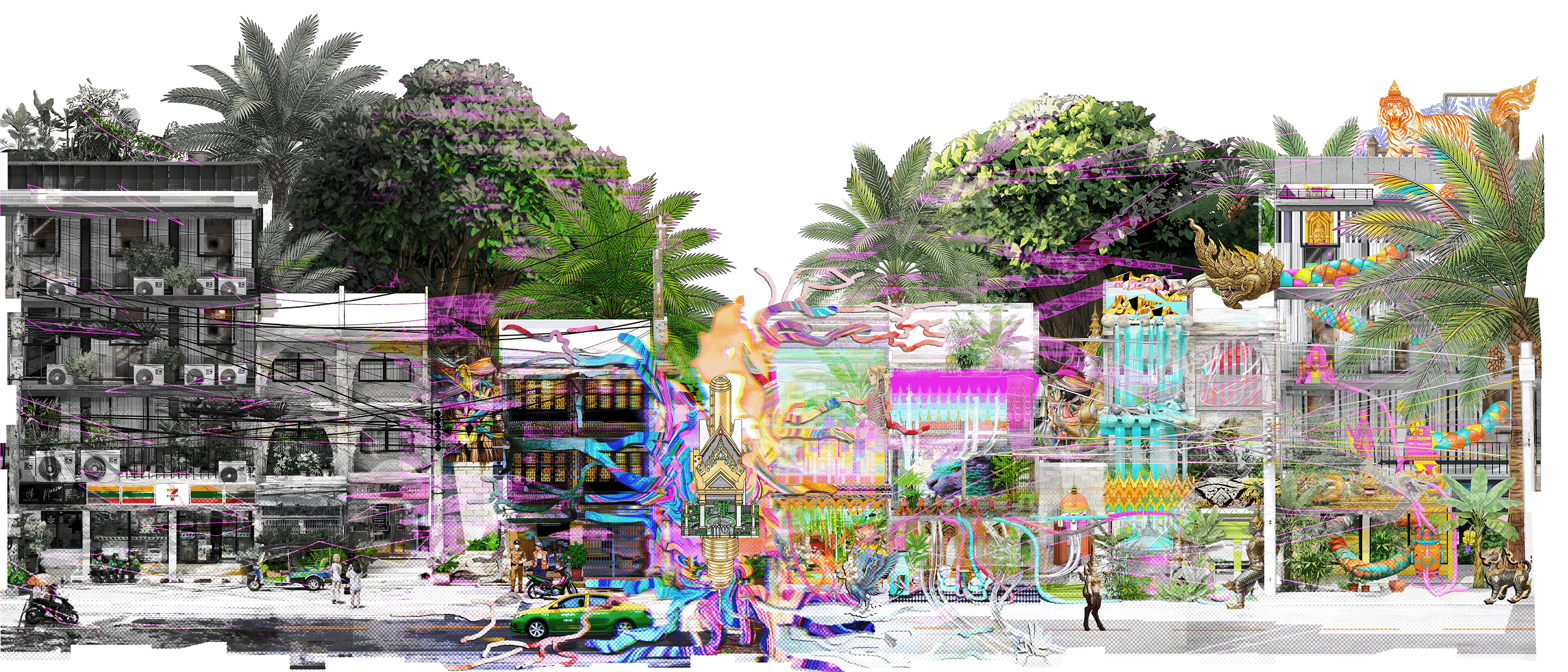
Bangkok offers a radical dance lesson. Its inhabitants generate a symbiotic relationship between the local and the foreign — an act of la perruque that strings the Heraclitean bow. Indigenous tactics pull against global foreign structures not to resist or destroy them, but to use the resulting tension as a force for spatial creativity. This dynamic really is a dance: forces sublimate, swallow one another, and then reappear wearing each other's skins.
This resilience is not accidental. Historically, Siam was the center of culture in Southeast Asia. The Siamese managed to navigate the Chinese, Indian, Mon, Malay, and Khmer empires without losing their core identity. When Siam became Thailand, it avoided colonization by employing what historians call "Bamboo Diplomacy" — the Thai strategy of bending with the western winds without breaking in them.
Today, Bangkok carries this legacy forward. It interacts with capitalism, tourism, digitization, and globalization not by rejecting them, but by bending with them. It accepts the modern world and thrives with it, yet remains undeniably Thai.
Bangkok has density, chaos, and a sense of radical inclusivity, while maintaining undeniable authenticity. This research presents Bangkok not as an exceptional place to be replicated, but as a lens for understanding how these dynamics work.
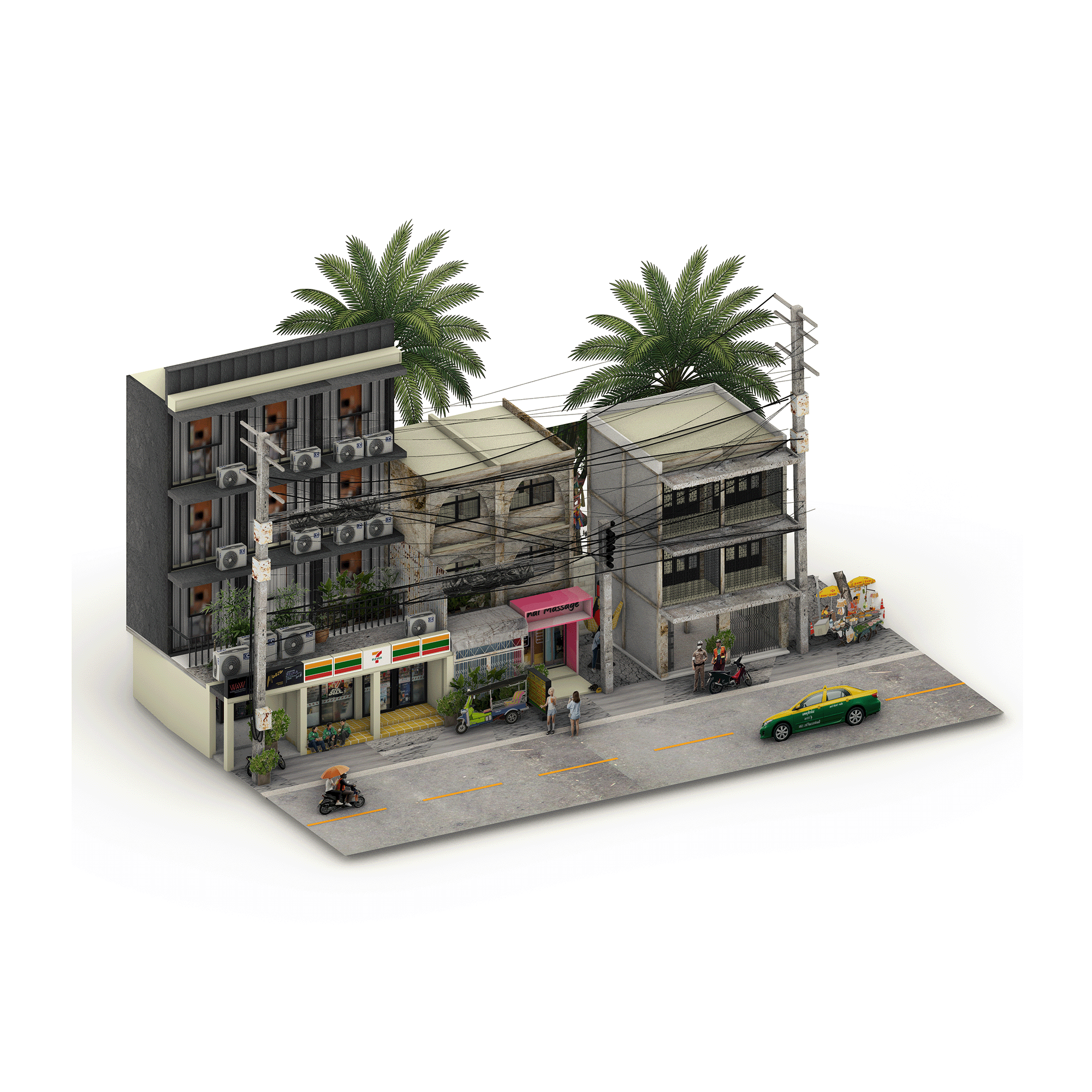
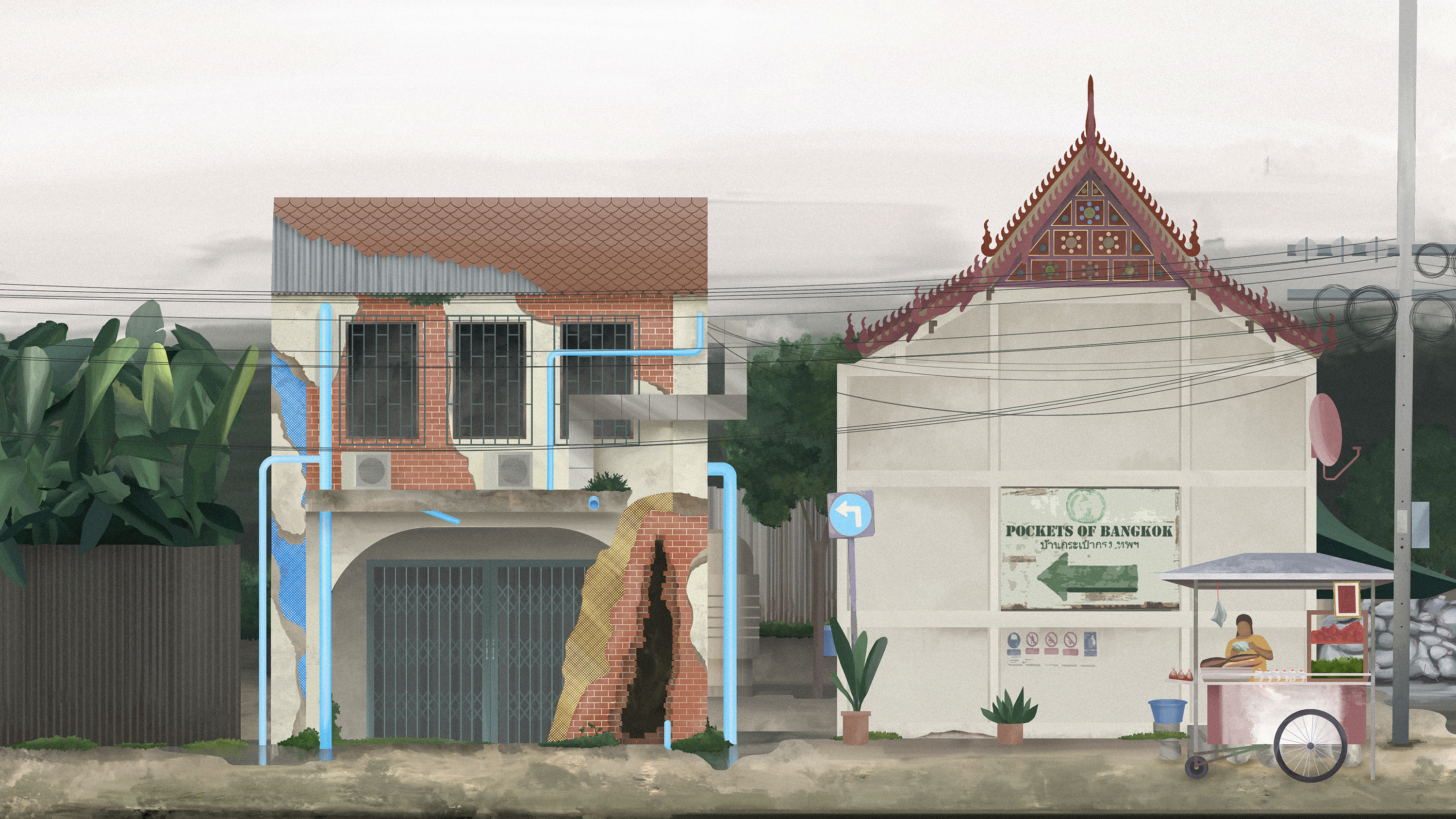
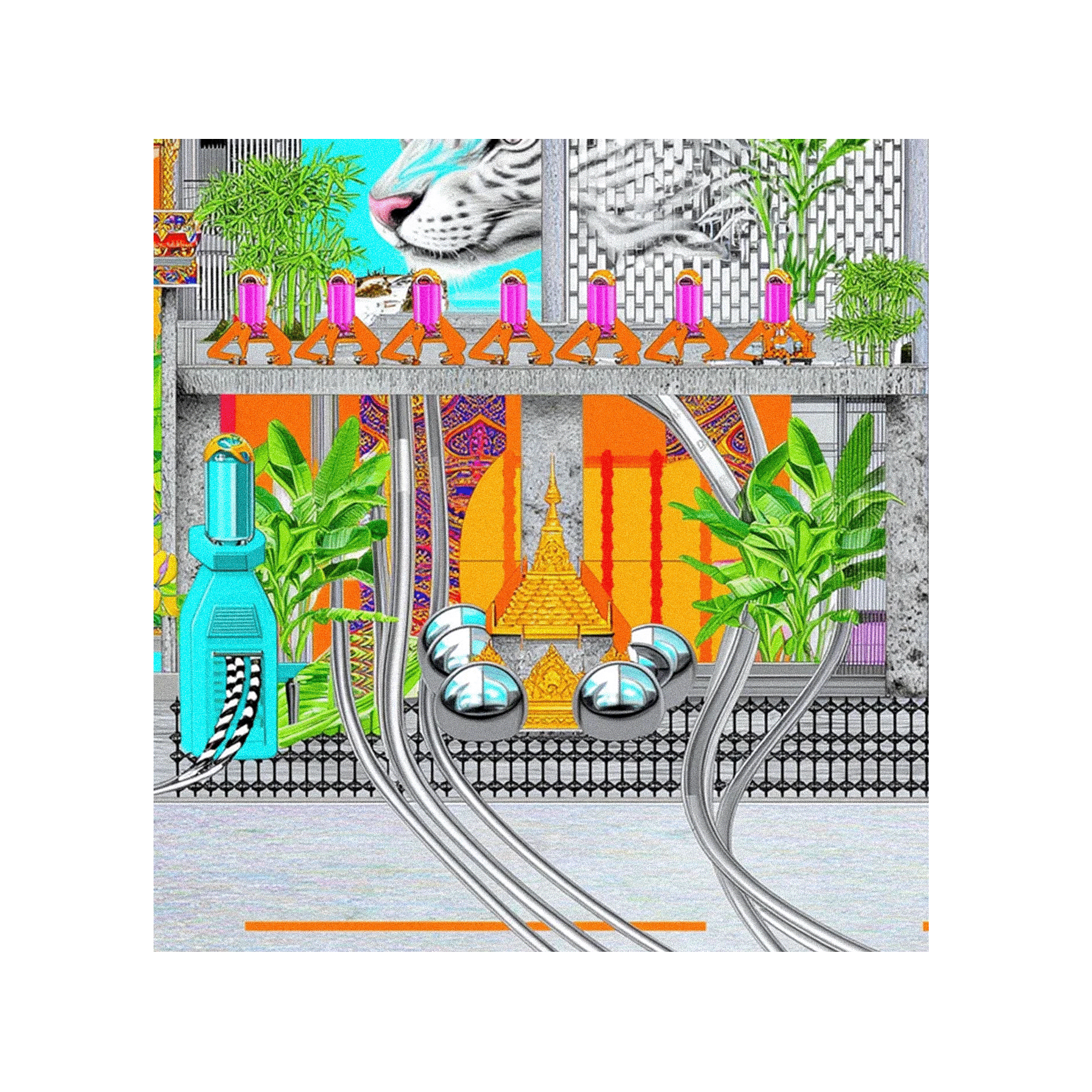
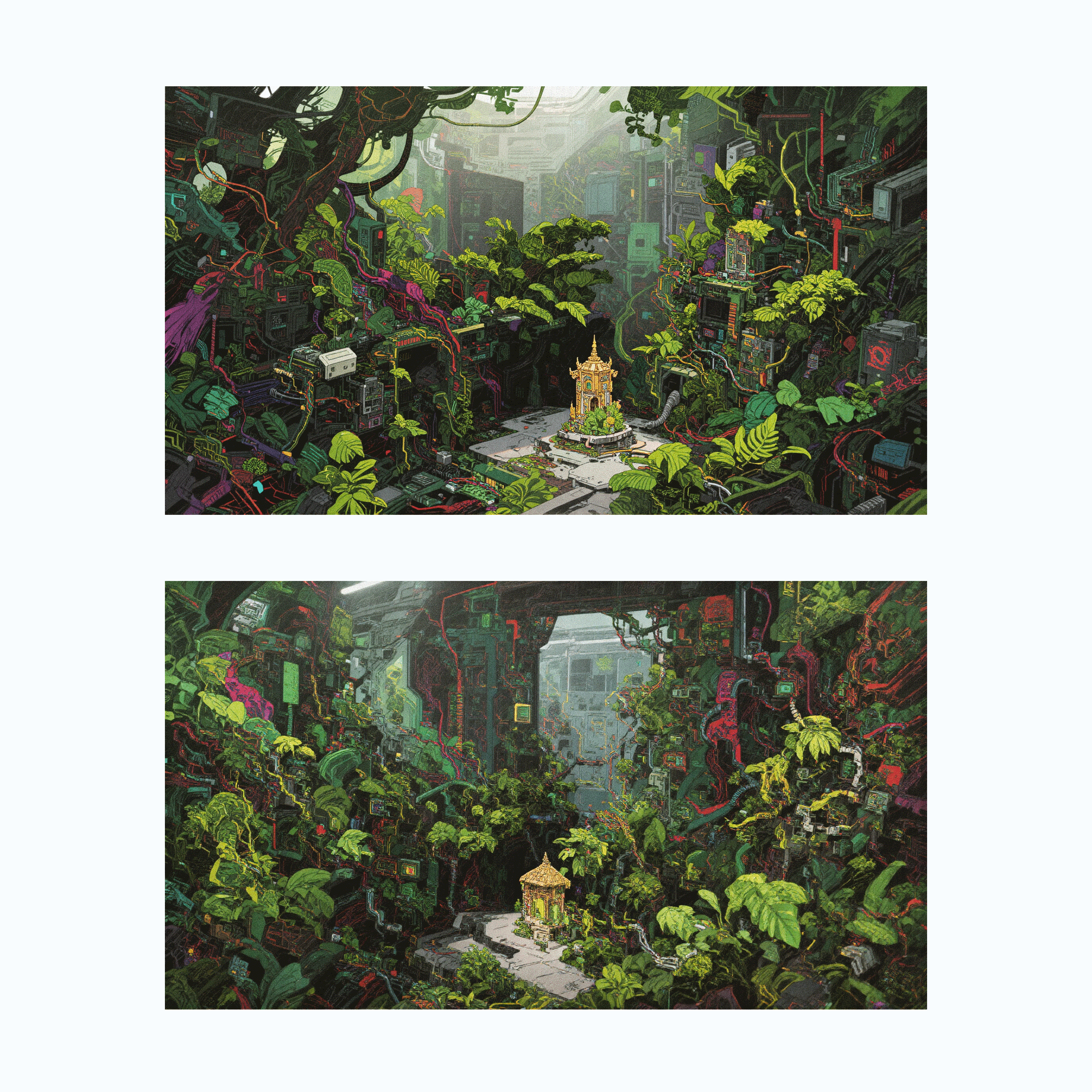
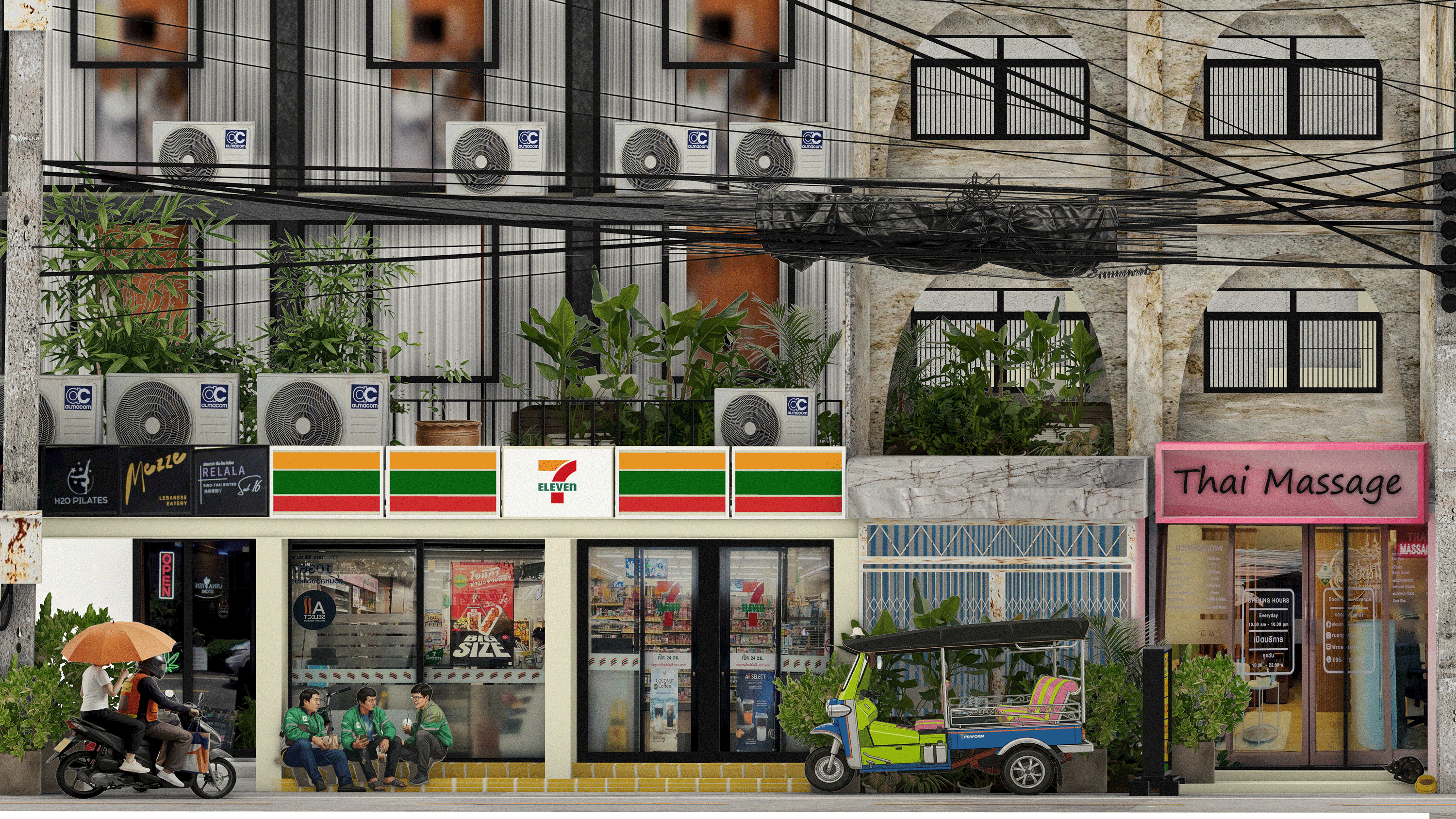
The core thesis is that Bangkok functions as a collection of "Pockets": authentic local cores wrapped in foreign interfaces — Thainess veiled in protective shells of simulated modernity. These pockets are architectural devices that interact with social, economic, and cultural activities. Bangkok is an immense foaming landscape of these pockets, which consist of the mall, skytrain, and condo as well as the soi, market, and shrine, among others.
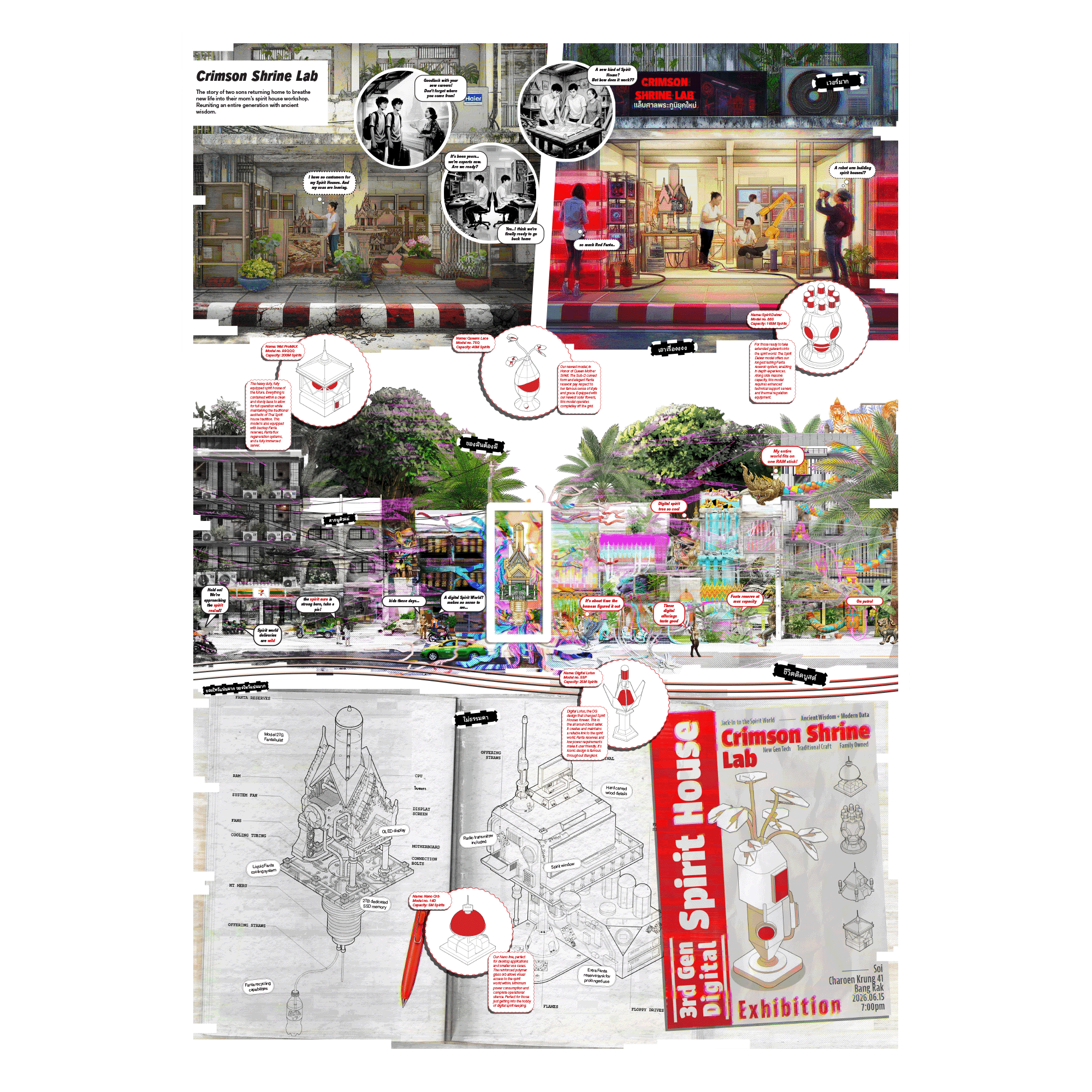
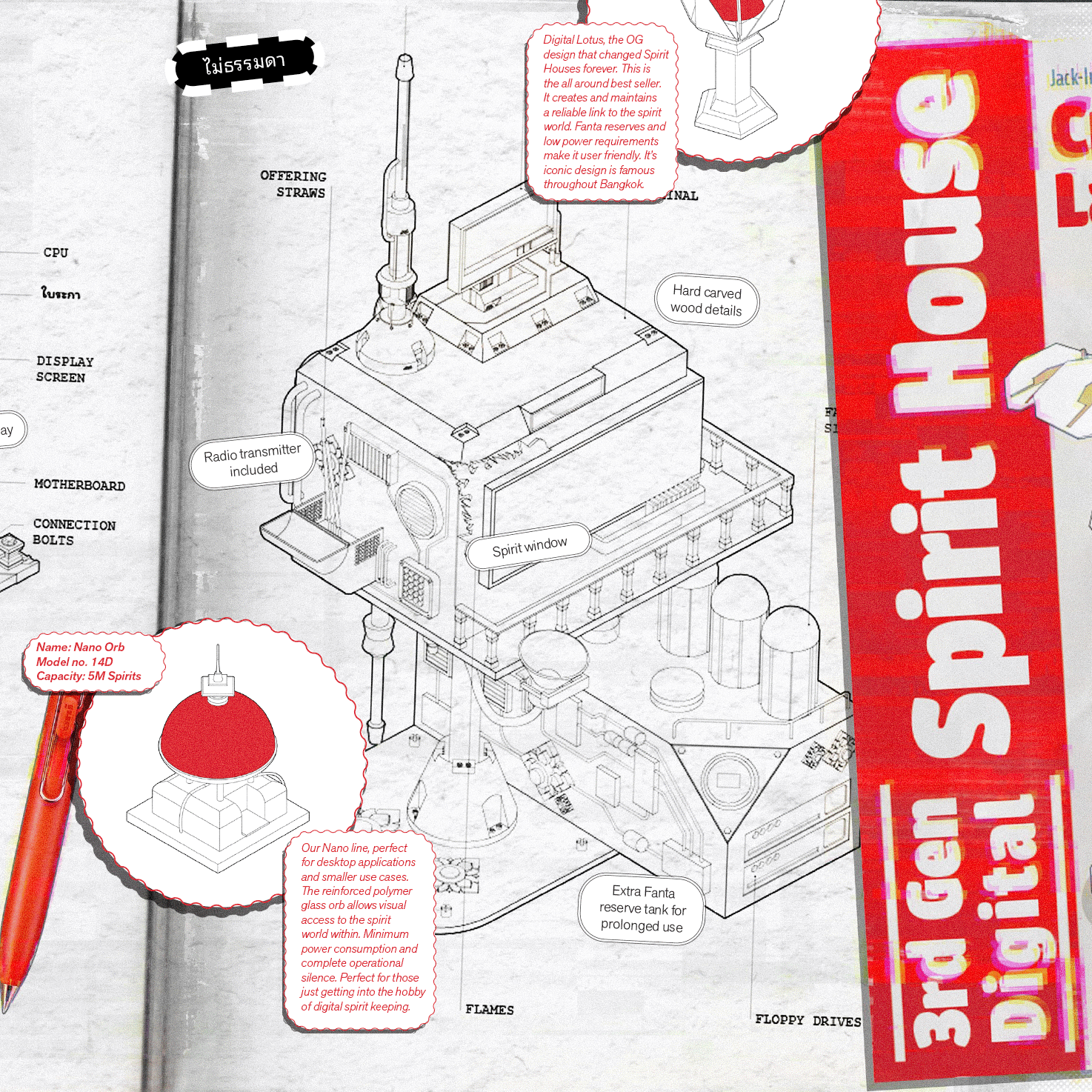
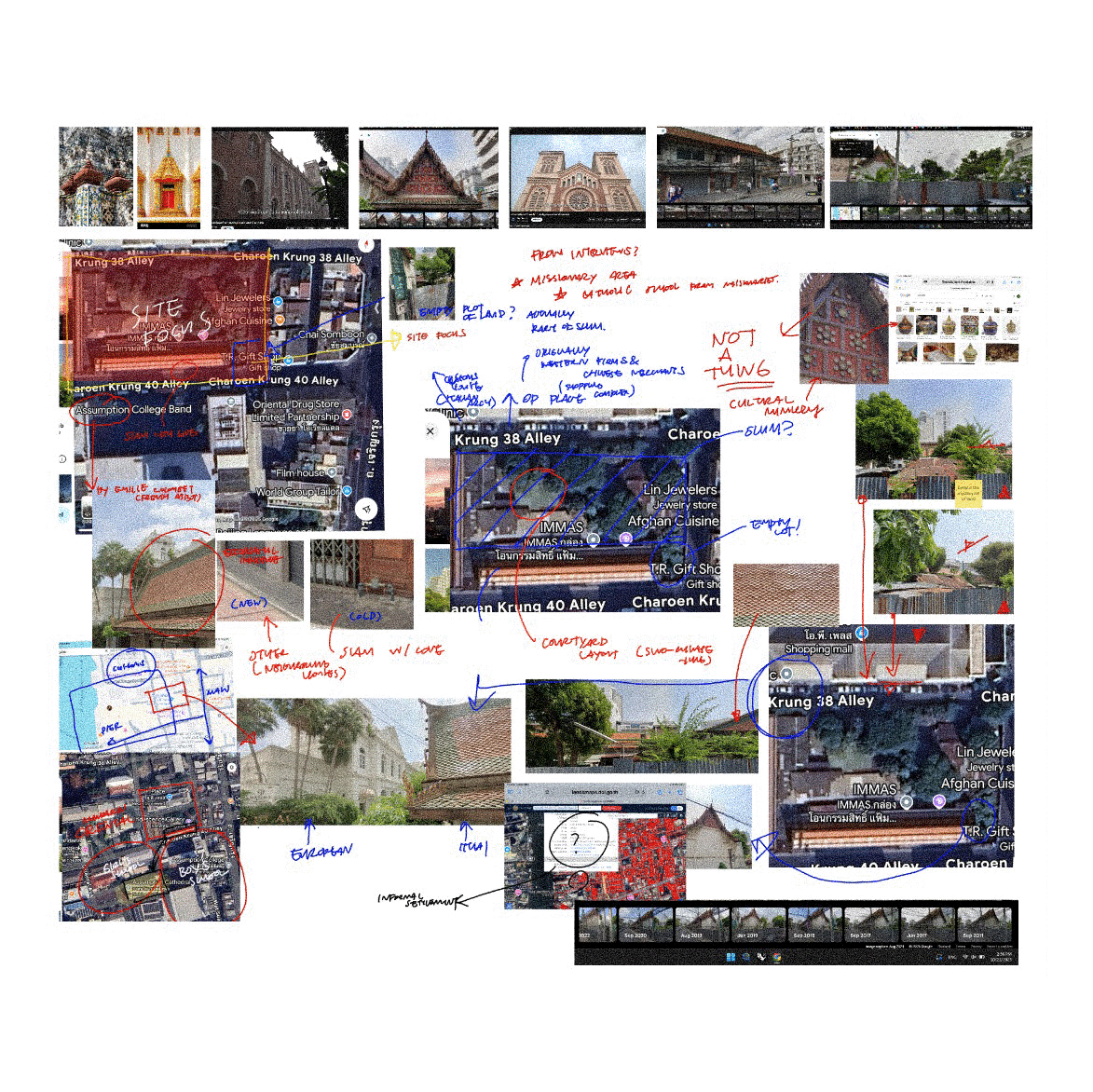
Pockets of Bangkok takes the form of multi-perspective analysis and documentation of these pockets, followed by creative exploration of what their differential energy can produce spatially. Pockets of Bangkok ultimately offers a way of seeing the world that moves beyond resistance, toward reciprocity, genuine interaction, and what the Thais call sabai sabai.